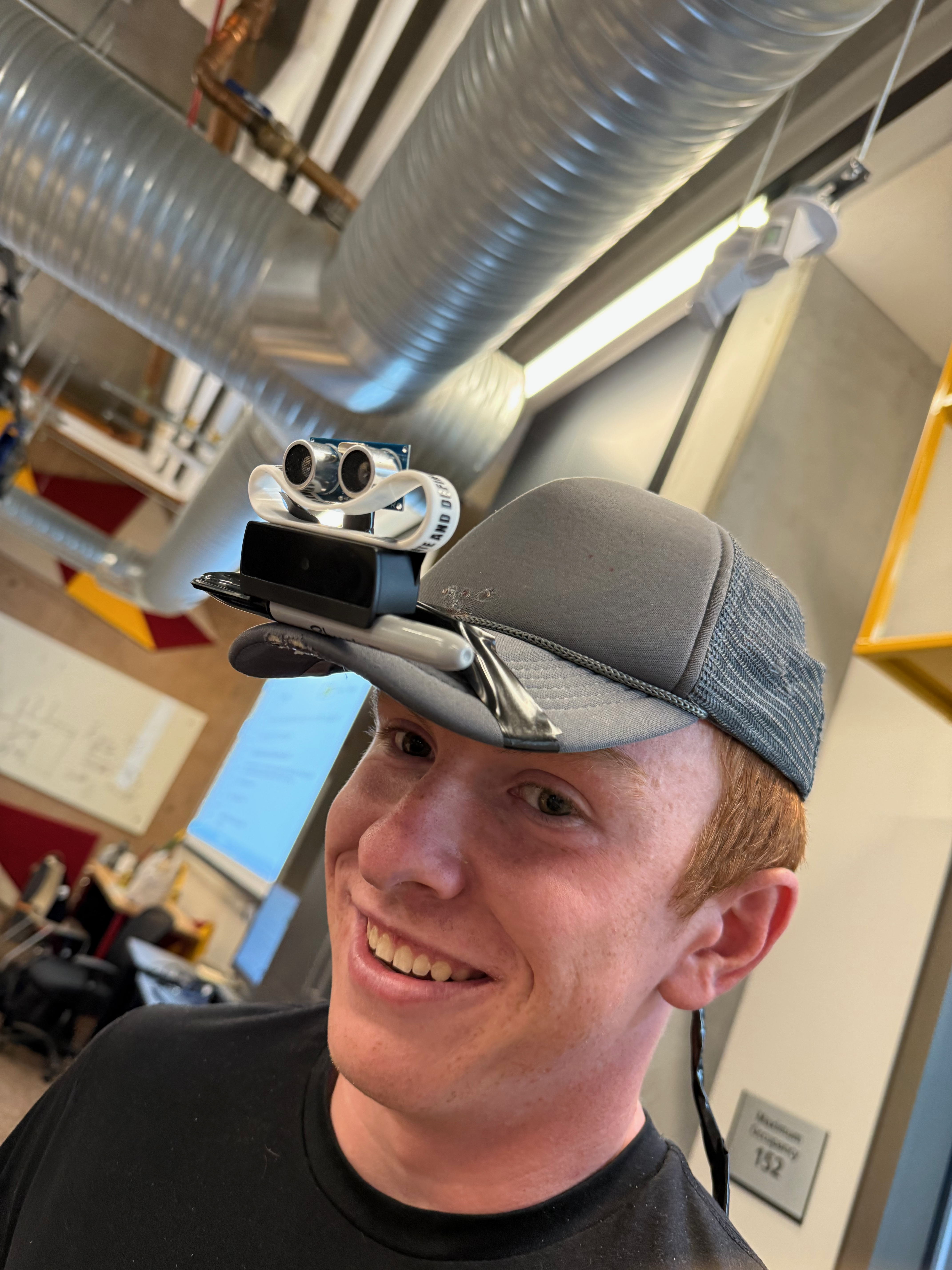
FSE 100: AI Vision Project
As part of an Introduction to Engineering course, collaborated on the design and construction of
a wearable assistance device intended to improve safety for visually impaired users. The goal
was to address hazards above waist level—an area not detectable by traditional white canes and a
common source of injury.
The system combined computer vision and proximity sensing to detect obstacles and provide
real-time feedback to the user. A camera captured images of the surrounding environment, which
were analyzed via an AI vision API to identify nearby obstacles. When an obstacle was detected,
a vibration motor provided tactile feedback to warn the user.
In parallel, an ultrasonic sensor continuously measured distance to nearby objects. If an object
entered a defined safety threshold, an audible buzzer was triggered to provide an additional
alert. This multi-sensor approach improved reliability by combining AI-based recognition with
direct distance measurement.
The final prototype demonstrated how layered sensing and feedback mechanisms can enhance user
awareness and reduce the risk of head-level collisions.